
Opalised fossils are among the rarest natural gemstones on Earth. Ancient bones, shells, and marine creatures that have been transformed into solid opal over millions of years. As someone who has spent time digging in Lightning Ridge and Coober Pedy, I’ve seen first-hand how extraordinary these fossils truly are.
If you’re searching for opal fossils for sale or want to understand how these geological miracles form, this guide breaks down the science, rarity, and value behind Australia’s most unique treasures.
Explore available fossils here: Opal Fossils Collection
What Exactly Are Opalised Fossils?
An opalised fossil is a prehistoric creature or shell that has been replaced by natural opal. Instead of decaying, the original structure is preserved in incredible detail, sometimes down to the growth lines of a shell or a belemnite.
Australia is the only place in the world where opalisation occurs on a large scale, especially in:
- Lightning Ridge – famous for black opal and opalised bones
- Coober Pedy – known for opalised shells and marine fossils and plenty of white opal.
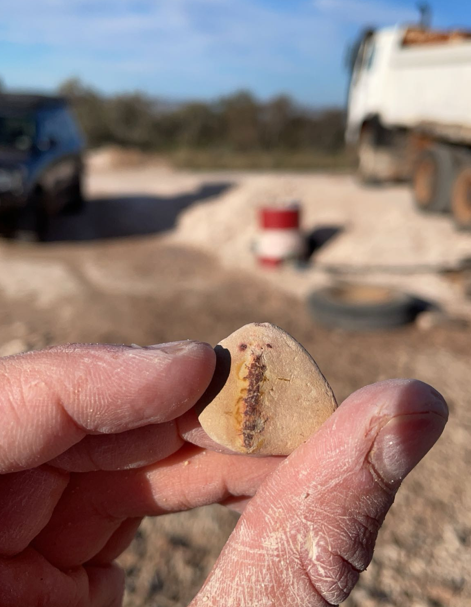
Here is an image of a fossilised centipede or millipede I found in Lightning Ridge:
To learn more about how fossils form in these regions, you can also read: How Opal Fossils Form: Inside Australia’s Lightning Ridge
How Do Opalised Fossils Form?
Opalised fossils form through a rare geological process called silica replacement. Millions of years ago, central Australia was covered by an inland sea. When creatures died, their bones or shells were buried in sediment.
Here is an video explaining the history of Opalised Fossils as well as me cutting a beautiful royal blue opal:
Over time, silica-rich water seeped into the cavities and replaced the organic material with opal. This process can take millions of years and requires extremely specific conditions, which is why opalised fossils are so rare.
The Three Types of Opalised Fossils
- Body Fossils – bones, teeth, shells replaced entirely by opal
- Internal Moulds – opal fills the inside of a shell or bone
- Partial Replacement – fossil structure mixed with natural opal
Some of the most famous examples include opalised belemnites, opalised mussels, opalised dinosaur bones, and opalised shells.
Why Are Opalised Fossils So Rare?
Only a tiny percentage of fossils ever form. An even smaller percentage become opalised. And an even smaller percentage are found intact by miners.
To put it into perspective:
- Most miners will never find a fully opalised fossil in their lifetime (void of any potch / sand, just pure opal colour)
- Most fossils are either colourless, or have many inclusions.
- Opal formation is already rare, now combine that with the likelihood of a fossil forming in sediment, that fossil degrading away, and that cavity filling with silica water, which then forms precious opal, the odds are so small!
This rarity is why collectors worldwide search for opalised fossils for sale, especially in the UK, where authentic Australian opal is in high demand.
What Makes Opalised Fossils Valuable?
The value of an opalised fossil depends on several factors:
- Type of fossil – shells are more common; bones and teeth are extremely rare
- Brightness and colour – red on black is the most valuable
- Completeness – full fossils are worth far more than fragments
- Origin – Lightning Ridge fossils are the most sought-after
If you’re a collector, you can browse authentic pieces here: Shop Opalised Fossils
Where to Buy Opalised Fossils in the UK
Many UK buyers search for:
- “opal fossils for sale UK”
- “opalised fossils”
- “where to buy opals in the UK”
- “opals near me”
But genuine Australian opal fossils are rare, and the market is full of fakes, treated stones, and mislabelled pieces.
At W.M OPALS, every fossil is sourced directly from miners in Lightning Ridge and Coober Pedy.
Explore the full collection: Authentic Opal Fossils for Sale
Final Thoughts
Opalised fossils are more than gemstones, they’re pieces of prehistoric history preserved in natural opal. Whether you’re a collector, jeweller, or simply fascinated by geology, owning one is like holding a 100‑million‑year‑old treasure in your hand.
For more opal guides, visit: Latest Opal Blogs